Manufacturing companies are under more pressure than ever. Across industries such as industrial automation, medical devices, automotive systems, electronics, and aerospace, buyers expect tighter tolerances, shorter lead times, stable quality, and scalable production capacity. At the same time, global supply chains remain unpredictable, forcing OEMs to rethink how they source precision components. For a closer look at this, see Smarter Freight Strategies.
One area receiving increasing attention is precision CNC turned parts manufacturing. While often overlooked compared to larger assemblies or advanced automation systems, turned components are fundamental to the reliability and performance of modern equipment. More from us: Driving Innovation in Modern Manufacturing.
From miniature shafts and threaded inserts to high-precision connectors and complex stainless-steel fittings, CNC turned parts now play a major role in product durability, assembly efficiency, and long-term operational stability.
The Shift Toward Precision Manufacturing
Over the last few years, manufacturers have moved away from simple low-cost sourcing strategies. Instead, companies are prioritizing suppliers that can provide consistent dimensional accuracy, engineering support, and dependable production systems.
This shift is especially visible in sectors where component failure is unacceptable. Medical instruments, semiconductor equipment, robotics systems, and fluid control assemblies all require parts manufactured with micron-level precision and repeatable consistency.
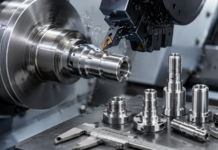
Modern CNC turning technology enables manufacturers to produce complex geometries with excellent surface finishes while maintaining tight tolerances throughout large production runs. Multi-axis Swiss-type CNC machines, automated inspection systems, and digital process monitoring have significantly improved both production efficiency and quality reliability.
As product designs become smaller and more sophisticated, the demand for experienced machining partners continues to rise.
Why CNC Turned Parts Matter More Than Ever
Precision-turn components are used in nearly every industrial sector because they provide excellent dimensional control and production efficiency for cylindrical or rotational parts.
These components are commonly used in:
Hydraulic systems
Pneumatic assemblies
Medical surgical devices
Automotive sensors
Electronic connectors
Aerospace fasteners
Industrial automation equipment
Robotics and motion systems
Even a minor dimensional deviation can affect assembly performance, sealing reliability, or product lifespan. This is why manufacturers increasingly rely on specialized suppliers with advanced machining capabilities and stable quality systems.
Professional suppliers with deep expertise in turning processes can also optimize material usage, machining efficiency, and production repeatability — all factors that directly impact overall manufacturing costs.
For companies sourcing complex custom components, choosing an experienced machining factory is no longer just a purchasing decision. It has become a strategic supply chain decision.
The Growing Importance of Reliable CNC Turning Factories
Many procurement managers have learned that the lowest-cost supplier often creates hidden risks. Inconsistent tolerances, unstable delivery schedules, poor communication, and inadequate inspection systems can lead to production delays and expensive quality issues.
As a result, buyers are now evaluating machining suppliers based on broader criteria, including:
Engineering support capabilities
Process stability
Quality management systems
Material traceability
Production scalability
Communication efficiency
Industry experience
Long-term manufacturing reliability
Working with an experienced CNC turned parts factory allows OEMs to reduce supply chain risks while improving production consistency.
Suppliers that specialize in Swiss machining and precision turning are particularly valuable for projects involving miniature components, tight tolerances, or high-volume production requirements. Their expertise helps customers achieve better dimensional stability and more efficient manufacturing outcomes.
Advanced Machining Technology Is Changing the Industry
Modern CNC machine is no longer limited to basic turning operations. Advanced manufacturing facilities now integrate automation, CAD/CAM programming, in-process inspection, and multi-axis machining systems into fully optimized production workflows.
This evolution offers several important advantages:
Improved Accuracy
High-performance CNC turning centers can maintain extremely tight tolerances even during extended production runs. This consistency is essential for industries that require exact component compatibility.
Faster Cycle Production
Automated bar feeders, robotic handling systems, and optimized tooling strategies help reduce production time while maintaining stable quality standards.
Better Surface Finishes
Advanced tooling and machining strategies improve surface quality, reducing the need for secondary processing and improving assembly performance.
Higher Production Scalability
Reliable machining systems allow manufacturers to scale from prototype development to mass production without major process instability.
Enhanced Material Flexibility
Modern CNC turning facilities can machine a wide range of materials, including:
Stainless steel
Aluminum
Brass
Titanium
Copper alloys
Plastics Engineering
High-temperature alloys
This flexibility enables manufacturers to support diverse industrial applications more efficiently.
Precision Components and Global Manufacturing Trends
Several major trends are driving increased demand for precision machine services worldwide.
Miniaturization
Industries such as medical devices, electronics, and aerospace continue moving toward smaller and more complex components. This requires advanced Swiss machining expertise and highly stable production systems.
Automation Growth
As factories adopt more automation systems and robotics equipment, demand for precision mechanical components continues increasing.
Supply Chain Diversification
Many companies are reducing dependence on single-source suppliers and building more resilient global sourcing networks. Reliable machining partners are becoming essential to this strategy.
Higher Quality Expectations
Customers now expect longer product lifecycles, better reliability, and tighter engineering standards. Precision machining directly supports these goals.
Because of these trends, sourcing high-quality precision components has become a competitive advantage rather than a simple procurement task.
Companies seeking stable manufacturing partnerships increasingly look for suppliers capable of delivering both engineering expertise and scalable production support. Professional manufacturers specializing in precision CNC turned parts are becoming an important part of this evolving industrial ecosystem.
Choosing the Right Manufacturing Partner
Selecting the right CNC machining supplier requires more than comparing pricing alone. Successful long-term partnerships are usually built around technical capability, communication efficiency, and production reliability.
Before choosing a supplier, manufacturers should evaluate:
Machining equipment capability
Inspection and quality systems
Experience with complex geometries
Material expertise
Production lead times
Engineering responsiveness
Export and logistics experience
Capacity for long-term scaling
Reliable suppliers not only manufacture parts but also contribute to product optimization and supply chain stability.
Final Thoughts
Precision CNC turned parts may be small components, but their impact on modern manufacturing is enormous. As industries demand tighter tolerances, better reliability, and faster production cycles, the importance of advanced machining partners continues to grow.
Companies that invest in reliable machining supply chains today will be better positioned to handle future manufacturing challenges, improve product quality, and maintain competitive production efficiency in an increasingly demanding global market.