Introduction
Manufacturing has entered a new era, one where precision, efficiency, and adaptability define success. While technology headlines often highlight AI, robotics, and additive manufacturing, the foundation of modern industry remains grounded in the ability to produce components that meet exacting standards. High-quality machining processes, especially those capable of producing complex, tight-tolerance parts, are increasingly essential for industries ranging from aerospace to medical technology. We cover this in more depth in Why Precision CNC Turned Parts Are Becoming Critical for Modern Manufacturing.
Global supply chains are under constant pressure to balance speed, cost, and quality. This demand has led companies to seek advanced machining solutions that ensure consistency while allowing for customization. By integrating specialized machining services into their production strategies, manufacturers can achieve a competitive edge while reducing operational risk.
The Evolution of Precision Manufacturing
The manufacturing landscape is evolving rapidly. As products become more sophisticated, the tolerance and performance requirements for individual components have tightened. Engineers now routinely work with parts measured in microns, where even minor deviations can have a significant impact on functionality.
Traditional machining methods are still valuable for many applications, but they often fall short when balancing high precision, repeatability, and efficiency. Advanced machining techniques, such as Swiss-style turning and multi-axis CNC operations, address these challenges by enabling complex geometries to be produced consistently at scale. Elsewhere on the site: How Modern Beef Processing Equipment Improves Plant Efficiency.
Beyond accuracy, reliability and throughput have become critical considerations. Manufacturers must meet demand fluctuations without compromising quality, and this often requires working with partners who specialize in precision machining processes and offer highly controlled production environments.
How Specialized Machining Improves Performance
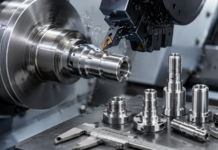
Swiss-style machining has emerged as a key solution for producing intricate, small-scale components. Unlike conventional lathes, these machines provide continuous support for the workpiece close to the cutting tool, reducing deflection and ensuring uniformity. This is especially valuable for industries where high-precision components are crucial, such as medical devices, aerospace connectors, and electronics assemblies.
Working with a trusted provider of specialized Swiss machining services allows manufacturers to produce complex parts efficiently while maintaining tight tolerances. These services are not only about machines but also encompass the engineering expertise required to optimize production workflows, tool selection, and process monitoring.
In addition, modern machining providers often integrate quality assurance at every step, from initial design review to final inspection, ensuring parts meet both regulatory standards and functional expectations. This level of control can significantly reduce waste, rework, and delays in product development.
Applications Across Diverse Industries
The demand for precision components spans multiple industries, each with unique requirements:
Medical Technology: Implants, surgical instruments, and diagnostic equipment demand exacting dimensional accuracy and biocompatibility. Even minor deviations can compromise safety or performance.
Aerospace and Defense: Components in aircraft and defense systems must withstand extreme stress, temperature, and fatigue conditions. Precision machining ensures reliability in critical applications.
Automotive Engineering: With the rise of electric and hybrid vehicles, lightweight, high-performance components are required to improve efficiency and thermal management.
Electronics and Telecommunications: Smaller, denser circuits and connectors require parts with micro-level precision. High-quality machined components contribute to the overall reliability of these systems.
Manufacturers can view examples of precision CNC Swiss machined components to understand how specialized machining techniques translate engineering specifications into real-world applications.
Choosing the Right Manufacturing Partner
Selecting the right machining partner is a critical factor in modern manufacturing strategy. A strong partner is defined not only by the equipment they operate but also by their engineering support, quality systems, and ability to scale production efficiently.
Key considerations include:
- Process Expertise: The ability to handle complex geometries, tight tolerances, and diverse materials.
- Quality Assurance: Rigorous inspection protocols and traceability to ensure reliability.
- Flexibility and Responsiveness: The capacity to adapt to design iterations without disrupting production schedules.
Manufacturers benefit from partnering with suppliers who provide end-to-end support, from prototyping and material selection to full-scale production. Such relationships help streamline supply chains, reduce risk, and ensure that products meet both performance and compliance requirements.
The Future of Manufacturing
Precision machining and specialized production services will continue to play a pivotal role in the future of manufacturing. As global competition increases, companies must rely on partners capable of delivering both quality and agility. The integration of advanced machining techniques, combined with robust process control, enables manufacturers to respond to evolving market demands without compromising on accuracy or efficiency.
The manufacturing sector is no longer just about producing parts; it is about creating a reliable ecosystem where innovation, engineering excellence, and production precision coexist. Companies that embrace these strategies are better positioned to thrive in a competitive landscape, delivering products that meet exacting standards while driving industrial growth.
Conclusion
Modern manufacturing is defined by precision, adaptability, and strategic partnerships. As the industry continues to evolve, specialized machining services and high-quality component production remain central to operational success. By working with trusted partners that offer advanced capabilities, manufacturers can ensure that their products not only meet design requirements but also maintain consistency and reliability at scale.
The future belongs to those who understand the value of precision engineering, and investing in specialized machining capabilities is an essential step for companies seeking to remain competitive in today’s complex industrial environment.